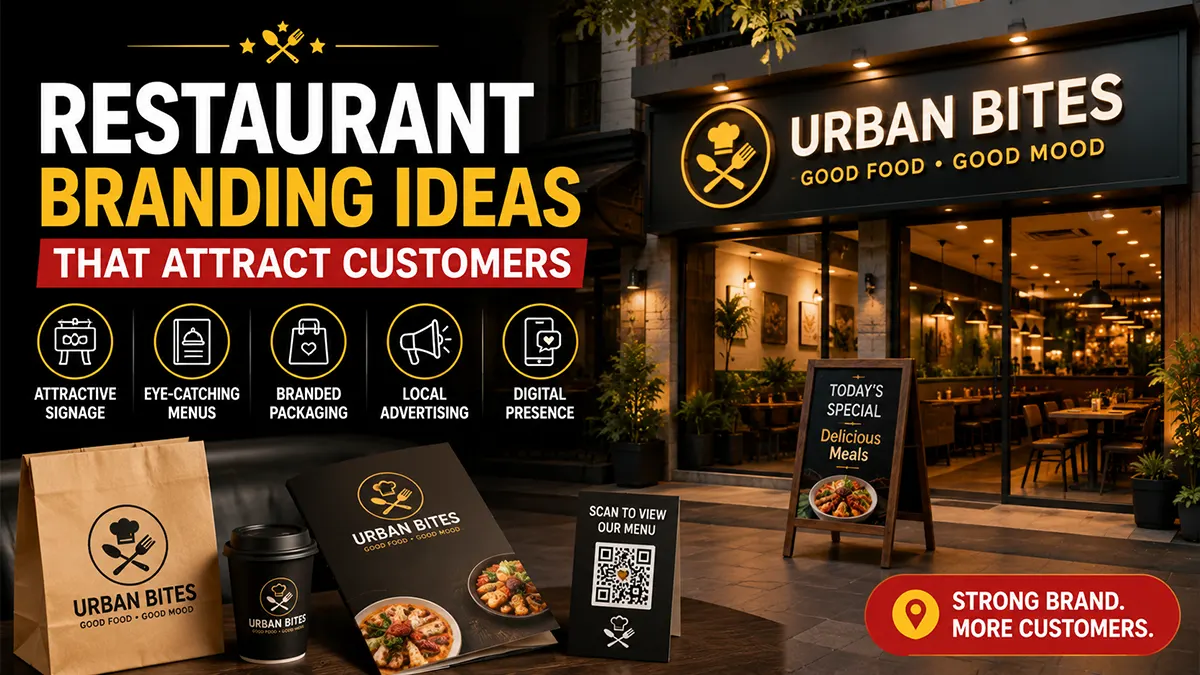
Why Restaurant Branding Matters in 2026
Customers often form their first impression of a restaurant before they enter the premises. A clear sign board, attractive storefront, consistent colours and professional menu can influence how people perceive the business.
Restaurant branding helps create consistency across the customer journey. The same visual identity can appear on the exterior sign, menu, takeaway packaging, staff uniforms, social media profiles, delivery materials and promotional campaigns.
Strong branding does not automatically guarantee more customers. However, consistent and relevant branding can make a restaurant easier to recognise, easier to remember and easier to distinguish from competing businesses.
What Is Restaurant Branding?
Restaurant branding is the process of developing a consistent visual and communication identity for a restaurant. It includes elements such as the logo, colours, typography, signage, menus, packaging, interiors, uniforms, advertising materials and online presence.
Effective restaurant branding should communicate the type of dining experience the business wants customers to associate with it. A family restaurant, premium dining outlet, fast-food restaurant and coffee shop may require very different branding approaches.
15 Restaurant Branding Ideas That Can Improve Visibility
The following restaurant branding ideas can be adapted according to your location, target customers, restaurant format and marketing budget.
1. Create a Clear Restaurant Brand Identity
Start with a consistent logo, colour palette, typography and visual style. Your identity should work across signage, menus, packaging, social media and advertising materials.
2. Invest in a Professional Restaurant Sign Board
Your main sign board is one of the most visible branding elements outside the restaurant. Choose readable lettering, appropriate contrast and materials suitable for the building and location.
3. Use Illuminated Signage for Night Visibility
Restaurants operating during evening hours can consider illuminated acrylic, LED or other suitable signage formats. Lighting should improve readability without making the sign visually cluttered.
4. Design an Easy-to-Read Menu
Menu design is an important part of restaurant branding. Use consistent typography, clear categories, appropriate spacing and high-quality food photography where required.
5. Brand Takeaway and Delivery Packaging
Branded takeaway boxes, paper bags, cups, stickers and packaging can extend your visual identity beyond the restaurant premises.
6. Use Consistent Interior Branding
Wall graphics, branded artwork, menu boards, table displays and directional signage can help create a consistent visual experience inside the restaurant.
7. Create Attractive Food Photography
High-quality food images can strengthen your digital presence. Use consistent photography styles across your website, social profiles, menus and promotional campaigns.
8. Build a Strong Google Business Profile Presence
Keep your restaurant's business information accurate and consistent online. Updated photos, opening hours, contact information and customer-facing details can support local discovery.
9. Use Local Outdoor Advertising
Restaurants can consider outdoor advertising near their target catchment areas. Suitable formats may include bus advertising, auto branding, mobile vans, outdoor signboards and other location-based media.
10. Brand Your Restaurant Vehicles
Delivery vehicles and business vehicles can become additional branding surfaces. Simple vehicle graphics can display the restaurant name, logo, website and other essential information.
11. Use Restaurant-Themed Wall Graphics
Wall graphics can reinforce the restaurant's personality while improving the appearance of selected interior or exterior spaces.
12. Create Seasonal Promotional Branding
Seasonal menus, festival promotions and special offers can use temporary branding materials while maintaining the core restaurant identity.
13. Make Your Entrance Easy to Recognise
Clear entrance signage, directional signs and consistent branding can make a restaurant easier to identify, particularly in busy commercial areas.
14. Use QR Codes Carefully
QR codes can connect physical branding with digital experiences such as menus, booking pages, feedback forms or promotional landing pages. Keep them large enough to scan easily and place them where customers can comfortably access them.
15. Keep Branding Consistent Across Channels
The restaurant name, logo, colours, messaging and visual style should remain reasonably consistent across physical signage, menus, packaging, social media, website and advertising campaigns.
Restaurant Signage Ideas for Better Local Visibility
Restaurant signage should balance visibility, readability, location requirements and brand identity. The right signage depends on building frontage, viewing distance, operating hours and local conditions.
| Signage Type | Suitable Use | Key Consideration |
|---|---|---|
| ACP Sign Board | Exterior restaurant signage | Durable finish and clean appearance |
| Acrylic Sign Board | Premium or illuminated branding | Finish, lighting and readability |
| LED Signage | Evening and night visibility | Lighting quality and maintenance |
| 3D Letter Signage | Premium storefront branding | Letter size and viewing distance |
| Menu Board | Product and pricing display | Easy readability and updates |
How Branding Can Influence the Restaurant Customer Experience
Restaurant branding extends beyond attracting attention from outside. Customers experience the brand through menus, interiors, packaging, staff presentation, online information and communication.
A consistent experience can make the restaurant appear more organised and easier to recognise. However, branding should support the actual customer experience rather than replace food quality, service, hygiene, pricing or operational standards.
Restaurant Branding for Local Businesses in Hyderabad
Hyderabad restaurants operate in a highly varied market that includes neighbourhood eateries, cafes, cloud kitchens, QSRs, premium restaurants, food courts and large-format dining outlets.
Local branding campaigns should therefore be based on the restaurant's catchment area rather than simply trying to reach the largest possible audience. A restaurant in a residential locality may prioritise nearby signage and local discovery, while a destination restaurant may need broader outdoor and digital awareness.
Restaurant Branding vs Digital Marketing
Physical branding and digital marketing serve different purposes. Restaurant branding creates visibility and consistency across physical touchpoints, while digital marketing can help customers discover the restaurant online and take measurable actions.
| Factor | Restaurant Branding | Digital Marketing |
|---|---|---|
| Main Purpose | Physical visibility and brand identity | Online discovery and engagement |
| Location | Storefront and selected local areas | Online platforms |
| Measurement | Can use enquiries, QR codes and offers | Digital analytics and conversion data |
| Brand Recall | Physical and visual repetition | Repeated online exposure |
| Best Approach | Strong local identity | Online reach and measurable actions |
How to Plan a Restaurant Branding Campaign
Define the Brand
Identify your restaurant's audience, positioning and visual identity.
Select Branding Areas
Choose signage, interiors, packaging, vehicles and promotional materials.
Create the Design
Develop practical creatives that remain readable and consistent.
Execute & Review
Install the branding and review its visibility and customer response.
How Much Does Restaurant Branding Cost?
Restaurant branding does not have one fixed price. The total investment depends on the number of branding elements, material selection, dimensions, design requirements, installation, location and campaign duration.
Common Cost Factors
- Sign board size and material
- Acrylic, ACP, LED or 3D lettering requirements
- Interior wall graphics and displays
- Menu and promotional printing
- Packaging and takeaway branding
- Vehicle or delivery branding
- Outdoor advertising campaign duration
- Installation and maintenance requirements
Common Restaurant Branding Mistakes to Avoid
- Using too many colours without a clear visual system.
- Making storefront signage difficult to read from a distance.
- Using inconsistent logos, fonts or colours across different materials.
- Filling signs and promotional materials with excessive text.
- Choosing materials without considering weather, maintenance and installation conditions.
- Treating branding as a replacement for food quality and customer service.
Related Branding & Advertising Guides
Frequently Asked Questions
Ready to Build a Stronger Restaurant Brand?
Share your restaurant location, branding requirements and campaign goals to explore suitable signage, outdoor advertising and promotional branding options.
Get a Free Consultation
GN Branding Agency Editorial Team
The GN Branding Agency Editorial Team publishes practical guides covering business branding, signage, vehicle branding, advertising, printing, and promotional solutions.
Meet Our Editorial Team →Editorial Note
This article is provided for general informational purposes. Material performance, pricing, installation requirements, and suitability can vary according to product specifications, project conditions, fabrication methods, location, and installation. Businesses should obtain a project-specific quotation and confirm applicable requirements before proceeding.